
Cavity Filler Ball Valve: Applications, Benefits, and Selection Guide
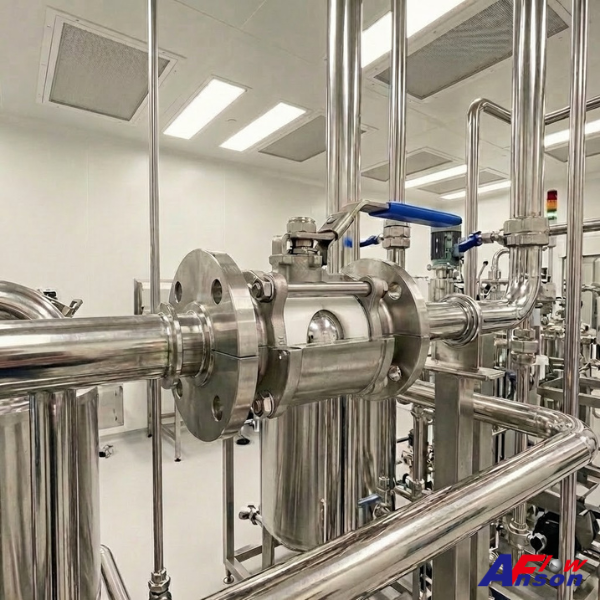
In high-purity, food-grade, and industrial applications, cavity filler ball valves are essential for eliminating fluid and particle entrapment. Unlike standard ball valves, these FDA-certified valves ensure tight shutoff, easy cleaning, and reliable operation in demanding environments, including semiconductor manufacturing.
What Is a Cavity Filler Ball Valve?
A cavity filler ball valve features special fillers or seat inserts that completely occupy the cavity around the ball. This design eliminates dead space where media could accumulate, reducing contamination, erosion, and maintenance requirements.
With a 90° ball rotation like a standard ball valve, the cavity filler ensures no internal pockets, providing a clean, high-purity, and reliable sealing solution for critical applications.
✅ Applications for Cavity Filler Ball Valves
Cavity filler ball valves are widely used in:
· Food & Beverage Processing — syrups, dairy, sauces, edible oils
· Pharmaceutical & Biotechnology — sterile lines, high-purity fluids
· Semiconductor Manufacturing — ultrapure water (UPW), specialty chemicals, wet process lines
· Chemical Processing — abrasive, viscous, or corrosive chemicals
· Cosmetics & Personal Care Production — hygienic and contamination-sensitive fluids
These valves are ideal wherever cleanliness, FDA compliance, and process reliability are critical.
⚖️ Cavity Filler vs. Conventional Ball Valves
|
Feature |
Conventional Ball Valve |
Cavity Filler Ball Valve |
|
Internal Cavity |
Present |
Eliminated |
|
Risk of Media Build-Up |
Higher |
Minimal |
|
Cleanability |
Limited |
Excellent |
|
Seal Tightness |
Moderate |
High (Class IV–V) |
|
Suitability for High-Purity |
Limited |
Excellent |
Key Benefits of FDA-Certified Cavity Filler Ball Valves
|
Feature |
Benefit |
|
Eliminates Dead Space |
Prevents fluid or particle entrapment and contamination |
|
FDA-Certified Materials |
Safe for food, pharmaceutical, and semiconductor applications |
|
High Chemical Compatibility |
Handles abrasive, viscous, or corrosive media |
|
Enhanced Cleanability |
Supports CIP and SIP cleaning processes efficiently |
|
Extended Service Life |
Reduces wear and maintenance downtime |
|
Reliable Shutoff |
Maintains tight sealing under pressure, thermal cycling, and frequent operations |
🧠 How to Choose the Right Cavity Filler Ball Valve
When selecting a cavity filler ball valve for high-purity, food-grade, or semiconductor systems, consider:
1. Operating Temperature & Pressure
2. Media Type & Chemical Compatibility
3. FDA-Certified Seat Material — PTFE, PEEK, RPTFE, or other engineered fillers
4. Actuation Options — manual, pneumatic, or electric
5. Valve Size & Connection Type — flanged, threaded, or welded
6. Industry Standards — FDA, USP Class VI, sanitary, or high-purity certifications
🏭 Why Choose Anson Flow Cavity Filler Ball Valves?
Anson Flow cavity filler ball valves provide:
· Zero-cavity design for maximum cleanliness
· FDA-certified filler materials for food, pharmaceutical, and semiconductor applications
· Full chemical compatibility and abrasion resistance
· Excellent suitability for CIP/SIP and high-purity processes
· Manual or automated actuation options
· OEM & private-label support
Whether your project involves food & beverage, pharmaceutical, semiconductor, or chemical systems, Anson Flow valves ensure reliability, safety, and performance.
📩 Need a Sample or Quote? Contact Us Today
📞 Let’s Talk
Whether you’re sourcing for food & beverage, pharmaceutical, semiconductor, or high-purity chemical systems, cavity filler ball valves offer the cleanliness, reliability, and performance your project demands.
📧 Email us at: sales@ansonflow.com
🌐 Visit: https://www.ansonflow.com/