
How to Choose the Right Stainless Steel for Industrial Valves and Components
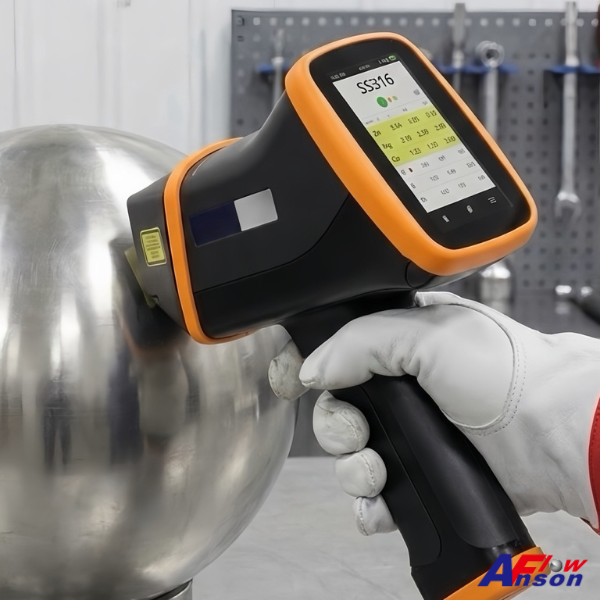
When selecting materials for industrial valves, piping systems, and OEM CNC-machined components, stainless steel grades such as SS304, SS316, CF8, and CF8M are frequently specified.
Although these grades are closely related, they differ in manufacturing method, carbon content, corrosion resistance, and suitability for welding and harsh service.
This article explains the correct correspondence and engineering logic behind wrought stainless steels (SS series) and cast stainless steels (CF series) to help engineers and procurement teams make informed material decisions.
1. Wrought Stainless Steel Grades (SS Series)
Wrought stainless steels are produced by rolling, forging, or CNC machining.
They are commonly used for pipes, fittings, valve stems, connectors, and precision machined parts.
SS304 Stainless Steel
· Austenitic stainless steel
· Standard carbon content
· Good general corrosion resistance
· No molybdenum (Mo)
Typical applications
· General industrial piping
· Food and beverage equipment
· Standard valve components
SS304L Stainless Steel (Low Carbon)
· Low-carbon version of SS304
· Reduced risk of intergranular corrosion after welding
· Improved weldability
Typical applications
· Welded piping systems
· Valve parts requiring welding
SS316 Stainless Steel
· Austenitic stainless steel with molybdenum (Mo)
· Better resistance to chlorides and corrosive media
· Higher corrosion resistance than SS304
Typical applications
· Chemical processing equipment
· Marine environments
· High-performance industrial valves
SS316L Stainless Steel (Low Carbon)
· Low-carbon version of SS316
· Best choice for welded components in corrosive environments
· Minimizes weld decay
Typical applications
· Pharmaceutical equipment
· Offshore piping systems
· Severe service valves
2. Cast Stainless Steel Grades (CF Series)
Cast stainless steels are manufactured by sand casting or investment casting and are primarily used for valve bodies, bonnets, and complex pressure-containing components.
CF8 (Cast Equivalent of SS304)
· Standard carbon cast stainless steel
· Similar chemistry to SS304
· Designed specifically for casting
Typical applications
· Standard cast valve bodies
· Water, oil, and general industrial service
CF3 (Cast Equivalent of SS304L)
· Low-carbon cast stainless steel
· Improved corrosion resistance at weld areas
Typical applications
· Welded cast valve bodies
CF8M (Cast Equivalent of SS316)
· Cast stainless steel with molybdenum
· Higher corrosion resistance than CF8
Typical applications
· Chemical process valves
· Marine and corrosive environments
CF3M (Cast Equivalent of SS316L)
· Low-carbon, molybdenum-containing cast stainless steel
· Highest corrosion resistance among CF grades
Typical applications
· Offshore and chemical processing valves
· High-temperature and highly corrosive service
3. Why Are SS304, SS316, CF8, and CF3M Often Highlighted?
Although there are eight commonly specified stainless steel grades
(SS304, SS304L, SS316, SS316L, CF8, CF3, CF8M, and CF3M),
engineering discussions and technical articles often focus on SS304, SS316, CF8, and CF3M.
This is because these four materials represent the key decision points in material selection, rather than the full list of options.
· SS vs CF represents the choice between wrought material and cast material
· 304 vs 316 represents the decision between general corrosion resistance and enhanced corrosion resistance (Mo-added)
· CF3M represents the high-end cast option, combining low carbon (weld reliability) and high corrosion resistance
In practical engineering terms, these four grades define the main selection boundaries:
· Wrought vs cast manufacturing method
· Standard vs high corrosion resistance
· Standard carbon vs low-carbon welding performance
Other grades such as SS304L, SS316L, CF3, and CF8M can be considered derivative options that refine weldability or corrosion performance based on these core selections.
4. Correct Stainless Steel Correspondence Table
|
Wrought Stainless Steel |
Cast Stainless Steel |
Carbon Level |
Key Feature |
|
SS304 |
CF8 |
Standard |
General corrosion resistance |
|
SS304L |
CF3 |
Low carbon |
Improved weld corrosion resistance |
|
SS316 |
CF8M |
Standard + Mo |
Higher corrosion resistance |
|
SS316L |
CF3M |
Low carbon + Mo |
Best corrosion & weld performance |
5. Wrought vs Cast Stainless Steel – Key Differences
|
Aspect |
Wrought Stainless Steel |
Cast Stainless Steel |
|
Manufacturing |
Rolled / forged / machined |
Cast |
|
Mechanical strength |
Generally higher |
Slightly lower |
|
Shape complexity |
Limited |
Excellent |
|
Cost efficiency |
Higher for complex parts |
More economical for valve bodies |
|
Typical use |
Stems, fittings, connectors |
Valve bodies, bonnets |
6. Material Selection Guidelines
· Choose SS304 or SS316 (wrought) when precision machining or higher mechanical strength is required
· Choose CF8 or CF8M (cast) when complex valve body geometry is needed
· Choose low-carbon grades (304L / 316L / CF3 / CF3M) when welding and long-term corrosion resistance are critical
7. Summary
· SS grades are wrought stainless steels mainly used for machined components
· CF grades are cast stainless steels primarily used for valve bodies
· Correct correspondence:
SS304 ↔ CF8, SS304L ↔ CF3, SS316 ↔ CF8M, SS316L ↔ CF3M
· Understanding these relationships improves reliability, service life, and lifecycle cost
Need help selecting the right stainless steel material?
If you are evaluating SS304, SS316, CF8, CF3, CF8M, or CF3M for industrial valves, piping systems, or CNC-machined components, we are happy to assist.
We can support you with:
· Stainless steel material selection for valves and piping
· High-temperature, corrosive, and welded application evaluation
· OEM CNC machining of stainless steel fittings, connectors, and piping components
· Material recommendations for metal seated ball valves and severe service conditions
📧 Contact us at:
sales@ansonflow.com
Please share your application details or drawings, and our team will help identify the most suitable material solution.