
Valve Selection for Extremely High- and Low-Temperature Applications
Introduction
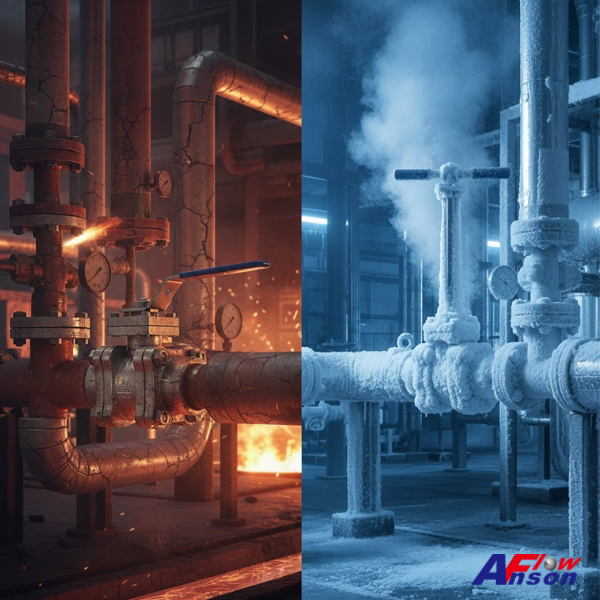
Temperature is one of the most critical factors in valve selection. Valves operating under extremely high or extremely low temperatures face unique challenges, including material deformation, seal failure, leakage, and even safety risks. Selecting the wrong valve for such conditions can lead to costly downtime, maintenance issues, or system failure.
This article provides a practical guide to selecting the right valves for extreme high-temperature and cryogenic low-temperature applications, focusing on design considerations, materials, and common industry practices.
Why Temperature Matters in Valve Selection
Extreme temperatures directly affect valve performance by influencing:
- Thermal expansion and contraction of materials
- Changes in mechanical strength
- Seal and packing degradation
- Operational reliability and safety
High temperatures may cause soft seats or packing materials to deteriorate, while low temperatures can make metals brittle and cause seals to shrink, leading to leakage.
Valve Selection for Extremely High-Temperature Applications
High-temperature applications typically involve operating temperatures above 400°C (750°F) and are commonly found in:
- Steam systems
- Oil & gas refining
- Petrochemical processing
- Thermal oil systems
Key considerations include:
- Resistance to thermal deformation
- High-temperature sealing performance
- Fire-safe design requirements
Recommended valve types:
- Metal seated ball valves
- Gate valves and globe valves for high-temperature service
- Fire-safe certified valves (API 607 / API 6FA)
Common materials:
- Carbon steel (WCB)
- Stainless steel (CF8, CF8M)
- Chrome-moly steels (WC6, WC9)
- High-performance alloys (e.g., Inconel)
Valve Selection for Extremely Low-Temperature (Cryogenic) Applications
Cryogenic applications typically operate below –50°C, with some reaching –196°C, such as LNG and industrial gas systems.
Common applications include:
- LNG facilities
- Liquid nitrogen, oxygen, or hydrogen systems
- Semiconductor and energy industries
Key design considerations:
- Material toughness at low temperatures
- Prevention of seal shrinkage and leakage
- Frost formation and operational safety
Critical design features:
- Extended bonnet design
- Cryogenic testing compliance
- Soft seats suitable for low temperatures
Typical materials:
- Stainless steel 304 / 316
- ASTM A351 CF8 / CF8M
- PTFE, PCTFE, or TFM1600 seat materials
High-Temperature vs. Low-Temperature Valve Design Comparison
|
Item |
High-Temperature Valves |
Low-Temperature Valves |
|
Main Risk |
Thermal deformation |
Brittleness & seal shrinkage |
|
Seat Type |
Metal seat |
Soft seat |
|
Bonnet Design |
Standard |
Extended bonnet |
|
Material Focus |
High-temperature strength |
Low-temperature toughness |
|
Typical Industries |
Oil & Gas, Steam |
LNG, Semiconductor |
Common Valve Selection Mistakes
- Using soft-seated valves in high-temperature service ( >260°C)
- Selecting carbon steel valves for cryogenic applications
- Ignoring packing and stem sealing performance
Conclusion
Selecting the right valve for extreme temperature applications requires careful evaluation of operating conditions, materials, and design standards. By understanding the challenges of high- and low-temperature environments, engineers and buyers can significantly improve system safety, reliability, and service life.
📩Looking for reliable valve solutions for extremely high- or low-temperature applications?
Our experienced team can help you select the right valves for high-temperature, cryogenic, and demanding industrial environments, ensuring safety, performance, and long-term reliability.
📩 Contact us today to discuss your application or request a quotation
✉️ Email: sales@ansonflow.com