
Padlock Plate vs Integrated Lock Hole: A Closer Look at Ball Valve Locking Handle Designs
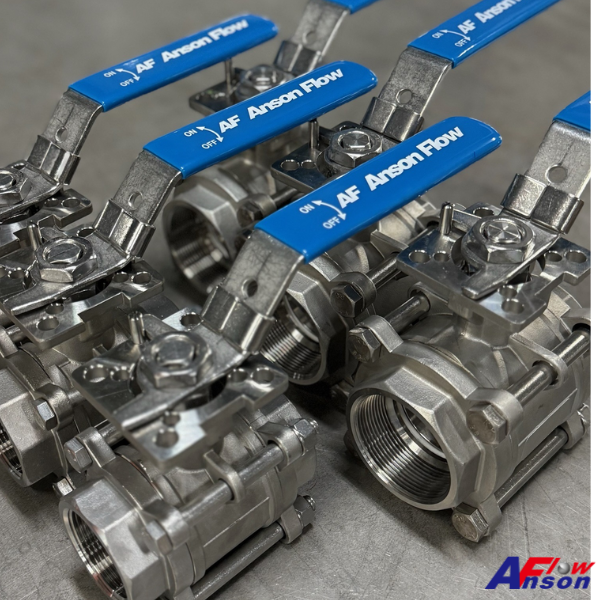
Both of Anson Flow's ball valve locking handle designs accept a padlock. Both meet Lockout / Tagout (LOTO) requirements. So what's the difference — and when does it matter?
The short answer: one of them has an added lock plate. That single component changes how the handle behaves in the field, and picking the right one comes down to what you're actually trying to prevent.
Here's how to tell them apart.
Why Ball Valve Handles Need to Lock
Any plant running a Lockout / Tagout program needs valves that can be physically secured during maintenance — not just tagged. That's the baseline function.
But there's a second, quieter problem: inadvertent operation. Valves get bumped by passing forklifts. Handles get grabbed by mistake in the dark. Vibration on a compressor skid slowly walks a lever out of position. These aren't LOTO events — they're daily wear-and-tear — but the consequences can be just as serious.
Different handle designs address these two problems differently.
Design 1: Handle with Lock Plate
A separate stainless steel lock plate sits at the base of the handle. It does two jobs:
- Padlock-ready for full LOTO — a padlock physically blocks handle rotation, just like any other locking handle
- Anti-tamper position hold — even without a padlock, the plate mechanically resists casual bumping, incidental contact, and low-level vibration, keeping the handle where the operator left it
The extra mechanism means a more robust presence on the floor. The plate is visible, engineered, and clearly a safety feature.
Best for:
- High-traffic zones where valves are exposed to accidental contact
- Vibration-prone installations (rotating equipment, compressor skids)
- Applications where you want a mechanical safeguard against handle drift between LOTO events, not just during them
- Group LOTO situations where the plate can accept multiple padlocks for multi-worker isolation
Design 2: Standard Padlock-Ready Handle
A flat steel handle without a separate lock plate. A padlock secures the handle against the valve body directly — no additional mechanism required beyond the handle itself.
Best for:
- Applications where inadvertent operation isn't a significant risk, and the handle is used strictly for controlled operation and formal LOTO events
- Installations that benefit from a single-component design with fewer parts to install, inspect, or specify
- Standardized LOTO programs where the padlock alone provides sufficient protection between events
Side-by-Side Comparison
|
Lock Plate Handle |
Standard Padlock-Ready Handle |
|
|
Padlock / LOTO support |
✓ |
✓ |
|
Anti-tamper position hold (no padlock needed) |
✓ |
Not designed for this |
|
Group lockout (multiple padlocks) |
Yes, plate accommodates |
Typically single padlock |
|
Component count |
Handle + lock plate |
Integrated handle |
|
Design profile |
Robust — visible engineered mechanism |
Streamlined — single-component |
|
Best for |
Anti-tamper + LOTO combined |
Clean LOTO in low-risk zones |
Neither is a higher grade than the other. They solve different problems, and Anson Flow specifies the appropriate handle style based on the valve model and typical application — not on price tier.
How to Choose in 30 Seconds
1. Is inadvertent handle movement a real risk in your installation? Yes (high-traffic, vibration, contractor-heavy environment) → Lock Plate handle No (protected pipe rack, dedicated operators) → Either works
2. Do you need group lockout with multiple padlocks on a single valve? Yes → Lock Plate handle No → Either works
3. Is a compact, single-component handle important for your installation? Yes → Standard Padlock-Ready handle No → Either works
FAQ
Q: Do both handle designs comply with LOTO regulations? Yes. Both accept standard padlocks and physically block handle rotation when locked. The choice between them is about additional protection (anti-tamper) and application fit, not baseline LOTO compliance.
Q: Can I choose either handle design regardless of valve model? Not always. Different Anson Flow ball valve models have their own factory-matched handle configurations based on size, torque requirements, and application category. For your specific model, contact our sales team to confirm what's available.
Q: What is the "lock plate" actually for if the handle already has a padlock hole? The lock plate provides mechanical resistance to handle movement without a padlock installed — protecting against accidental bumping, vibration walking, or unauthorized casual operation. It's a second layer of protection between formal LOTO events.
Talk to Us Before You Specify
Which locking handle style ships with your valve depends on the specific Anson Flow model, size, and configuration you're specifying. If your application involves high traffic, vibration exposure, or specific LOTO padlock standards, let us know early — we'll match you to the right handle configuration and provide the documentation your safety auditors will look for.
Both handle styles are available across our ball valve range, including our fire-safe series, sanitary series, and general-service ball valves.
📩 Talk to our engineering team: sales@ansonflow.com 🌐 Explore our full range: www.ansonflow.com