
Why the Bolted Bonnet Is the Industry Standard for Gate and Globe Valves
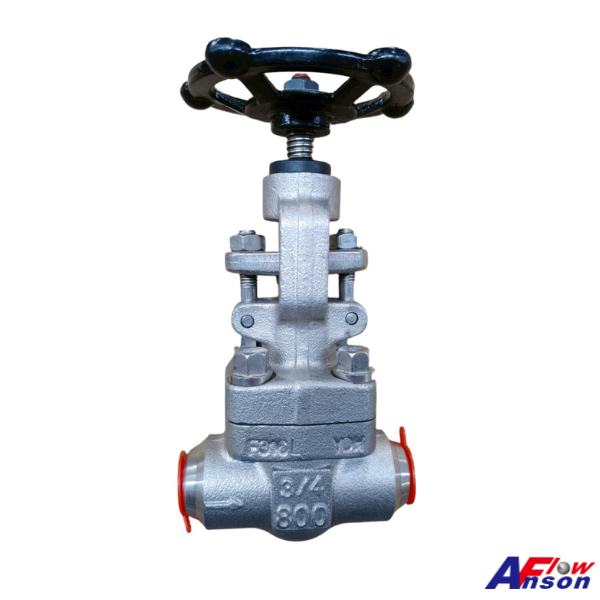
Every gate and globe valve has to solve one quiet but critical problem: how to seal the joint between the body and the bonnet — the pressure boundary that also has to open back up whenever the valve needs service. How that joint is made determines the valve's pressure capability, its maintainability, and how safely it holds over years of thermal cycling.
There are several ways to close a bonnet — screwed, union, welded, pressure-seal — but for the vast majority of industrial gate and globe valves, one design has become the default: the bolted bonnet. Here is why it earns that position.
1. Built to Be Serviced, Not Scrapped
The internals of a gate or globe valve are wear parts — the gate's wedge and seats, the globe's disc and seat, and the stem and packing common to both. Over a long service life they need inspection, re-machining, or replacement.
A bolted bonnet makes that routine. Undo the bonnet bolts and the entire trim is accessible: lap the seats, replace the wedge or disc, renew the stem or packing, and re-torque. Compare that with a welded bonnet, which seals permanently but turns any internal wear into a scrap-the-valve event. This matters even more on globe valves, which are frequently used for throttling and repeated operation — duties that wear the disc and seat faster and make easy access essential. Over the life of a plant, a serviceable valve is almost always the lower total cost, and the bolted bonnet is what makes service possible.
2. High Pressure and Temperature, Held Predictably
The bolted joint is a studded, gasketed pressure boundary. Bolt preload clamps the bonnet to the body across a defined gasket, and that clamp load is what contains the line pressure — not thread engagement, and not an operator's feel on a wrench.
Because the load is set by torqued studs, it is predictable, inspectable, and repeatable. That is what lets bolted-bonnet gate and globe valves cover the full industrial range — from ANSI Class 150 up to Class 2500 — and ride out the repeated thermal cycling of steam, process, and pipeline service without loosening.
3. A Defined, Replaceable Seal
The body-bonnet joint seals on a discrete gasket chosen for the duty: sheet gaskets at lower classes, spiral-wound or ring-joint metallic gaskets at higher pressures.
This matters because the sealing element is a known, specified, replaceable part — not an assumption. When the bonnet is opened for service, the gasket is simply renewed, and the joint returns to a defined sealing condition every time. Screwed and union bonnets cannot offer the same combination of high-pressure integrity and clean re-sealing.
4. Standardized, Certified, and Easy to Specify
The bolted bonnet is the joint the governing standards are written around. Cast-steel gate valves are built to API 600 and forged-steel to API 602; steel globe valves to B16.34 — all with pressure-temperature ratings to ASME B16.34 and shell/seat testing to API 598.
For a buyer or engineer, that means a bolted-bonnet gate or globe valve is interchangeable, inspectable, and globally accepted — you specify a class and a standard, and you know exactly what you are getting. It is the path of least risk in procurement.
5. A Platform for Variants
Because the bolted bonnet is a modular, bolted structure, it adapts cleanly to demanding service. The clearest example is cryogenic duty: an extended bolted bonnet moves the stem packing away from the cold zone, keeping the seal warm and workable. Both gate and globe valves take the same variant — it simply bolts onto the proven architecture.
The AnsonFlow Gate & Globe Valve Range
|
Model |
Type & Design |
Range |
|
AF-GTE |
Gate · cast steel · bolted bonnet · API 600 |
ANSI 150–2500 · PN10–40 · JIS 10K/20K · 1/2"–36" |
|
AF-GTF |
Gate · forged steel · bolted bonnet · API 602 |
ANSI 150–1500 · 1/2"–2" |
|
AF-GTC |
Gate · cryogenic · extended bolted bonnet |
1/4"–3" |
|
AF-GVE |
Globe · cast steel · bolted bonnet · B16.34 |
ANSI 150–900 · PN10–40 · JIS 10K/20K · 1/2"–12" |
|
AF-GVF |
Globe · forged steel · bolted bonnet · API 602 / BS 5352 |
ANSI 150–2500 · 1/2"–2" |
|
AF-GVC |
Globe · cryogenic · extended bolted bonnet |
ANSI 150/300 · JIS 10K/20K · 1/2"–6" |
All are built to the bolted-bonnet standards that make gate and globe valves serviceable, certifiable, and reliable across oil and gas, petrochemical, power, and process service.
Tell us your class, size, material, and service conditions, and our engineering team will help you specify the right configuration.
📩 sales@ansonflow.com 🌐 https://www.ansonflow.com/product-category/check-globe-gate-n