26-Feb-2026

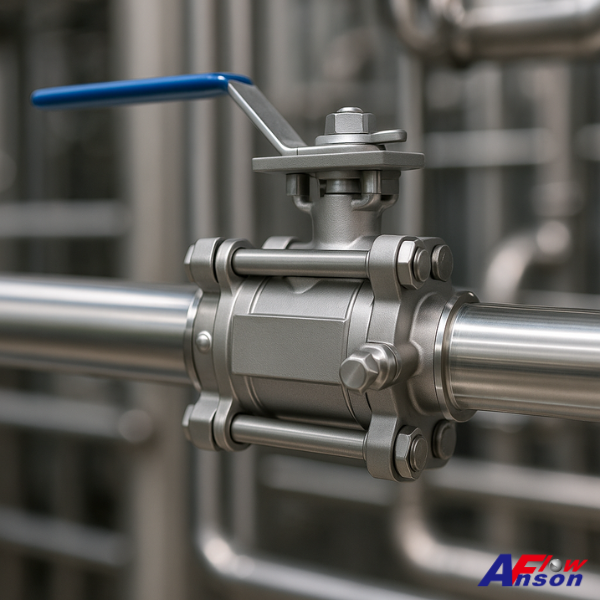
In today’s high-performance industries—such as petrochemicals, semiconductors, pharmaceuticals, energy, and process control—precision is non-negotiable. A minor leak, mis-reading, or unstable flow can cost both safety and efficiency. That’s why instrumentation valves and needle valves are indispensable: they deliver reliability, accuracy, and durability for critical fluid control.   🎯 Instrumentation Valves: Reliability for Complex Systems At Anson Flow, our instrumentation valves are engineered with advanced designs and high-quality materials to meet the most demanding applications. Key Features of Anson Flow Instrumentation Valves ·         High Pressure Capability: With ratings up to 3000 PSI, suitable for both gas and liquid lines. ·         Durable Construction: Forged SS316 stainless steel or precision bar stock, ensuring corrosion resistance and long service life. ·         Leak-Tight Performance: TFM1600, PEEK, and PTFE seats provide tight shut-off and low emissions. ·         Flexible Connections: Available with compression ends and threaded ends, allowing quick installation and replacement across different piping and instrumentation setups. ·         Ease of Maintenance: 3-piece designs simplify assembly, disassembly, and repair without removing the valve from the pipeline.   ⚙️ Highlight Products ·         AF-72 Three-Piece Instrumentation Valve o    Floating ball design for tight sealing and low torque operation o    Perfect for instrumentation panels and fine process control ·         AF-74 Instrumentation Check Valve o    Reliable one-way protection to prevent backflow o    Low pressure drop, ensuring minimal impact on system dynamics ·         AF-75 Three-Way Instrumentation Ball Valve o    Lightweight, compact, multi-port switching valve o    Ideal for complex fluid routing, mixing, or diverting applications   🎛️ Needle Valves: Fine-Tuned Flow Control For applications where flow must be adjusted gradually and precisely, needle valves are the ultimate solution. AF-NVS Needle Valves offer: ·         Pressure resistance up to 10,000 PSI (PN600) ·         Compact sizes from ¼″ to 1″ for versatile integration ·         Tapered needle stems for exact control of gas and liquid flow ·         Essential for calibration, sampling, and high-purity fluid control systems   🌍 Why Anson Flow? ✔️ Global Standards Compliance – API, ANSI, DIN, PN specifications available✔️ ISO 9001 Certified Manufacturing – reliable quality assurance✔️ OEM Flexibility – custom parts and valves manufactured based on drawings✔️ Proven Durability – engineered to reduce downtime and maintenance costs   📌 Conclusion In industries where precision matters most, Anson Flow’s instrumentation valves and needle valves provide the foundation for safe, accurate, and efficient operations. From one-way protection with check valves, to multi-port switching, to fine-tuned flow adjustments, our products are designed to meet the challenges of today’s most demanding systems. 👉 Explore our Instrumentation Valves and Needle Valves to see how Anson Flow can help you achieve precision in every drop. 👉 Need a sample or a quote? Contact us today to discuss your application. 📧 Email us at: sales@ansonflow.com🌐 Visit: https://www.ansonflow.com/

26-Feb-2026

In today’s rapidly evolving industrial landscape, automating valve control isn’t just a luxury—it’s essential. Enhanced precision, safety, and operational efficiency are within reach thanks to valve automation, the integrated use of components such as actuators, solenoid valves, limit switches, electric motors, and air filters. Let’s explore how each plays a vital role in smarter flow control.   1. Actuators: Powering Valve Movement Actuators are the driving force of valve automation. They convert energy—electric, pneumatic, or hydraulic—into motion, enabling valves to open, close, or modulate precisely. The two most common categories are pneumatic and electric actuators. Pneumatic Actuators Spring Return (Single-Acting): Compressed air moves the valve in one direction, while a spring automatically returns it to a fail-safe position (open or closed) when air pressure is lost. Ideal for safety-critical applications. Rack & Pinion (Double-Acting): Air pressure alternates on both sides of the piston, moving the rack to rotate the pinion and valve stem. Provides consistent torque in both directions and is highly reliable for frequent cycling. Accessories: Air filters and regulators remove contaminants and moisture that could damage internals or cause malfunctions. By ensuring high-quality air supply, they extend equipment life and maintain reliable operation. Electric Actuators Driven by electric motors, these actuators excel in precision and integration with digital control systems. Features such as modulating control, torque limiters, and feedback signals make them perfect for applications requiring accurate positioning and remote operation. Ideal for indoor or remote setups where compressed air is unavailable.   2. Solenoid Valves: Fast and Responsive Flow Control Solenoid valves are compact, electromechanical devices that control fluid or gas flow via an electrical signal. They’re used to shut off, release, or redirect media quickly and reliably. Available as normally open (N.O.), normally closed (N.C.), and multi-port configurations. Often installed in manifolds to support complex automation systems with multiple valves.   3. Limit Switches: Real-Time Position Feedback Limit switches confirm whether a valve is open or closed, providing essential feedback for automation and safety systems. Mechanical or proximity switches ensure accurate end-position detection. Often paired with indicator beacons for visual confirmation of valve status.   4. Electric Motors: Reliable Drive for Valve Automation Electric motors are key power sources for valve actuators. They often incorporate worm gearing for self-locking and position holding. Built-in limit switches or torque sensors protect against over-torque and mechanical stress. IP67 protection ensures reliability in harsh or outdoor environments.   Summary Table Component Role in Valve Automation Key Benefit Actuator Provides motion (pneumatic or electric) Fast, reliable valve operation Solenoid Valve Controls air or fluid via electrical signal Quick switching, compact design Limit Switch Confirms valve open/closed position Safety, feedback to control systems Electric Motor Drives actuators with torque and precision Precise control, remote operation   Conclusion Valve automation brings together powerful actuators, fast solenoid valves, accurate limit switches, durable motors, and clean air supply to create flow control systems that are safer, more efficient, and reliable. By understanding each component’s role, industries can design automation solutions that deliver performance and dependability in every process.   👉 Need a sample or a quote? Contact us today to discuss your application. 📞 Let’s TalkWhether you’re sourcing for an industrial plant, water treatment facility, or chemical process line, our valve automation solutions deliver the reliability and precision your project demands. 📧 Email us at: sales@ansonflow.com🌐 Visit: https://www.ansonflow.com/

26-Feb-2026

In industries where purity, safety, and corrosion resistance are non-negotiable, choosing the right valve technology can make all the difference. PFA (Perfluoroalkoxy) lined valves are engineered to handle the most aggressive chemicals and ultra-pure fluids, ensuring reliability and long-term performance in demanding environments.   Why Choose PFA Lined Valves? PFA is a high-performance fluoropolymer that offers: ·   Exceptional chemical resistance – compatible with strong acids, bases, and solvents. ·   Smooth, non-stick surface – minimizes fluid contamination and prevents buildup. ·   High-temperature tolerance – up to 260°C (500°F) depending on application. ·   Long service life – resistant to corrosion, scaling, and wear. These properties make PFA lined valves the go-to choice for industries like pharmaceuticals, semiconductors, food & beverage, and chemical processing.   Applications ·   Chemical Processing & Petrochemical Plants – Handles acids, alkalis, and solvents with ease. ·   Water Treatment & Demineralized Water Systems – Keeps fluid lines uncontaminated and efficient. ·   Pharma / Food & Beverage / Sterile Systems – Maintains strict sanitation standards for sensitive operations. ·   Pulp & Paper / Mining / Metals / Refining – Withstands wear from aggressive media and high-cycle environments.   Our PFA Lined Valve Product Range At Anson Flow, we offer a complete line of PFA lined valves designed to meet various operational needs: ·   AF-S4B PFA Lined Ball Valve – Precise shut-off for corrosive and high-purity fluids. ·   AF-S4R PFA Lined Spring Check Valve – Prevents backflow in chemical pipelines. ·   AF-S4F PFA Lined Butterfly Valve – Lightweight, quick-operation design for large flow control. ·   AF-S4P PFA Lined Plug Valve – Ideal for applications requiring minimal maintenance. ·   AF-S4D PFA Lined Diaphragm Valve – Perfect for sterile and hygienic systems. ·   AF-SPF PFA Lined Pipe Fitting – Ensures full system integrity from source to outlet.   Key Advantages of Our PFA Lined Valves ·   Corrosion-Free Performance – Reliably withstands even the most aggressive chemicals without degradation. ·   Thick PFA Linings (≥2.5mm) – Provides enhanced durability and extended service life in demanding environments. ·   Global Standards Compliance – Available in ANSI, JIS, PN, and other international specifications to meet diverse market needs. ·   Custom-Engineered Solutions – Tailored designs and configurations to fit unique operational requirements.    Conclusion Whether you operate in high-purity chemical production or ultra-clean manufacturing, PFA lined valves provide unmatched reliability, chemical resistance, and long-term cost savings. With our comprehensive product range and expertise, Anson Flow is your trusted partner for high-performance valve solutions. 🔗 Explore our full range of PFA lined valves: View Products 📧 Email us at: sales@ansonflow.com 🌐 Visit: https://www.ansonflow.com/

26-Feb-2026

Flanges (法蘭) are crucial components in piping systems, used to connect pipes, valves, pumps, and other equipment. Selecting the right flange standard ensures compatibility, safety, and long-term performance—especially for projects involving international specifications. In this post, we break down the three most common flange standards:ANSI (ASME) from the U.S., DIN from Germany, and JIS from Japan. We’ll also highlight their sub-specifications and usage differences.   🔧 1. ANSI / ASME Flange Standards (🇺🇸) ANSI (often in practice referred to as ASME, the American Society of Mechanical Engineers) is the most widely used flange standard in the oil & gas, petrochemical, and industrial sectors. ✅ Key Features: ·         Inch-based sizing ·         Designed for high-pressure, high-temperature environments ·         Commonly used in heavy industry ·         Compatible with NPT (threaded pipe) systems ✅ Key Sub-Standards: Spec Description ASME B16.5 Flange dimensions, pressure-temperature ratings, materials, and testing (½”–24”) ASME B16.10 Standardized face-to-face and end-to-end dimensions for valves ASME B16.34 Design criteria, wall thickness, and pressure-temperature ratings for valves  🔹 Pressure Classes: 150, 300, 600, 900, 1500, 2500 lbs 🔹 Common Materials: Carbon steel, stainless steel, alloy steel   🔩 2. DIN Flange Standards (🇩🇪) DIN (Deutsches Institut für Normung) flanges are widely used in Europe and internationally, especially in chemical processing and mechanical engineering. ✅ Key Features: Metric system (millimeters) Pressure-based classification (PN) Excellent for precision manufacturing and process industry usage ✅ Common DIN Standards: Spec Description DIN EN 1092-1 Flanges and their joints (European standard) DIN 2501 Flange dimensions based on pressure rating (older standard) DIN 2631–2638 Weld neck flanges for different pressure classes 🔹 Pressure Ratings (PN): PN6, PN10, PN16, PN25, PN40, PN64, PN100, PN160… ✅ Note: "PN" (Pressure Nominal) = pressure in barsE.g., PN16 = 16 bar ≈ 232 psi   🔧 3. JIS Flange Standards (🇯🇵) JIS (Japanese Industrial Standards) are commonly used in Japan and Southeast Asia, especially in HVAC, plumbing, food, and general industry. ✅ Key Features: Uses metric measurements Pressure classification is in K (kgf/cm²) ✅ Common JIS Flange Standards: Spec Description JIS B2220 Steel pipe flanges (main JIS flange standard) JIS B2238 Cast iron flanges JIS B2239 Copper alloy flanges 🔹 Pressure Ratings: 5K, 10K, 16K, 20K, 30K ✅ Note: 10K ≈ 10 kgf/cm² ≈ 142 psiJIS flanges typically have a lighter design than ANSI or DIN.   📐 ANSI vs DIN vs JIS: Comparison Table Feature ANSI (ASME B16) DIN (EN / DIN) JIS (B2220) Origin USA Germany Japan Units Inches Millimeters Millimeters Pressure Classes 150–2500 lbs PN6–PN160 5K–30K Industry Usage Industrial, Oil & Gas Chemical, Mechanical HVAC, Plumbing, Marine Some of customers might confuse,"Can ANSI and JIS flanges be connected directly?" ❌ No. Flanges from different standards—such as ANSI and JIS—are not dimensionally compatible, even if they share the same nominal pipe size (NPS).Key differences include: ·         Bolt hole patterns ·         Bolt circle diameters ·         Center bore dimensions These variations mean that direct connection is not possible without using an adapter flange or making modifications to the piping design.   🧠 Conclusion: Choosing the Right Flange Whether you're engineering a plant in the U.S., Europe, or Asia, understanding flange standards is essential for ensuring compatibility and compliance. Here’s a quick guide: ✅ Use ANSI/ASME for oil & gas or heavy industry ✅ Use DIN for European manufacturing and process systems ✅ Use JIS for light-duty or Asian plumbing/HVAC applications   🛠 Need Help? If you're unsure which standard suits your project, our engineering team is ready to help.Contact us today for flange sizing, material selection, and technical support! 📧 Email us at: sales@ansonflow.com 🌐 Visit: https://www.ansonflow.com/

26-Feb-2026

In the world of industrial valve systems, one often-overlooked component is the valve handle. While valve performance is typically the focus, the type of handle used can significantly affect the overall safety, efficiency, and ease of use of a system. Among various options, the spring return handle offers specific advantages in certain applications. In this article, we'll explore when it makes sense to choose a spring return handle and why it’s especially beneficial in demanding industrial environments. ✅What is a Spring Return Handle? A spring return handle (also called deadman handle) is a handle equipped with a spring mechanism that automatically returns the handle to its default position (usually the closed or neutral position) after it has been turned or adjusted. This built-in feature reduces the need for manual intervention and helps ensure that valves are always positioned correctly, even in high-stress situations.   ✅When Should You Choose a Spring Return Handle? 1. High-Pressure and High-Temperature Environments In applications where valves control high-pressure fluids or high-temperature gases, using a spring return handle ensures that the valve automatically returns to a closed or neutral position after use. This is particularly critical in situations where human error could result in safety hazards, such as leaks, bursts, or equipment damage. 2. Handling Hazardous Materials In systems that transport or process hazardous materials, the automatic return feature of a spring return handle adds a layer of security. In case of operator error or unforeseen circumstances, the valve will return to the safe position, ensuring that toxic or flammable materials are not accidentally released into the environment. 3. Increased Operational Efficiency and Ease of Use Spring return handles reduce the effort required for manual operation, which can be a significant advantage in environments where valves need to be frequently adjusted. This not only increases operational efficiency but also minimizes the chances of human error, especially in systems with frequent valve cycles. 4. Reduced Maintenance and Longer Valve Lifespan Frequent manual operation of valves can lead to wear and tear on both the handle and the valve itself. A spring return handle minimizes the chances of improper valve positioning, which can result in damage to the valve or leaks. As a result, these valves experience less wear and require less maintenance, extending their operational life. 5. Cost Savings in the Long Run While spring return handles may incur a slightly higher initial cost, they provide substantial long-term savings by reducing the likelihood of leaks, accidents, and damage to the system. The added reliability of automatic valve control minimizes downtime and reduces the need for costly repairs or replacements. ✅Applications for Spring Return Handles 1. Food and Beverage Industry In the food and beverage industry, where hygiene and operational efficiency are paramount, a spring return handle on valves ensures that the valve will automatically close after use, reducing the chances of contamination or accidental spills. It also simplifies the operation, allowing workers to focus on other tasks without needing to worry about manually closing the valve. 2. Pharmaceutical and Semiconductor Industries In semiconductor wafer cleaning lines, valves equipped with spring return handles provide consistent and secure control over ultra-pure gases, ensuring that the system operates without contamination risks. 3. Sampling Valves in Chemical Plants Operators open valves briefly to collect samples. Using an valve with a spring return handle ensures the valve automatically closes after each sample is taken, preventing hazardous leaks if forgotten. 4.Emergency Drain in Fire-Risk Zones In applications that require fire-safe valves, such as petrochemical tank drains, the valve with a spring return handle offers dual protection: fire resistance and automatic closure. ✅Conclusion: The Value of Spring Return Handles in Industrial Applications If your process demands momentary flow control, automatic shutoff, or enhanced operator safety, a spring return handle is a smart and reliable upgrade. For maximum compatibility and performance, choose from Anson Flow’s supported models: AF-23, AF-33, AF-35, AF-51, and AF-51F These valves, combined with spring return handles, deliver enhanced control, reduced risks, and improved efficiency across a range of industries—from chemical to food processing to oil and gas. Contact Anson Flow today to learn more about spring return handle options and get help selecting the best configuration for your system.

26-Feb-2026

In demanding industrial applications where high temperatures, abrasive media, or extreme pressures are involved, metal seated ball valves are the go-to solution. Unlike soft-seated valves, which use PTFE or other polymer-based seals, metal seated valves use precision-engineered metal-to-metal contact to ensure tight shutoff under harsh conditions. 🔧 What is a Metal Seated Ball Valve? A metal seated ball valve uses a ball and seats made from hardened metal materials, such as stainless steel, Stellite, Tungsten Carbide, or Chromium Carbide coatings. The ball rotates within the valve body to control flow, just like standard ball valves, but the metal contact surfaces can withstand far more severe conditions. ✅ When to Use Metal Seated Ball Valves Metal seated ball valves are typically chosen for: 🌡️ High-temperature environments (up to 540°C or more) 🧪 Abrasive or slurry applications 🔥 Fire-safe systems ⚙️ Steam, hydrocarbons, refinery, or power generation pipelines 🧼 Applications requiring frequent cycle life with minimal maintenance ⚖️ Metal Seated vs. Soft Seated Ball Valves Understanding the difference between metal seated and soft seated ball valves is critical when selecting the right valve for your application. Feature Soft Seated Ball Valve Metal Seated Ball Valve Sealing Material PTFE, TFM, PEEK, Delrin (Acetal) Hardened Metal (e.g. Stellite, Tungsten Carbide) Temperature Range PTFE: ~140°C; PEEK: ~260°C; Delrin: ~80°C Up to 500°C (or higher with special alloys) Media Suitability Clean, non-abrasive fluids and gases Abrasive, corrosive, or high-solid media Seal Tightness None Visible Leakage Class IV–V Wear Resistance Good with PEEK/Delrin; lower with PTFE Excellent (ideal for erosion and slurry)       📝 Summary: Soft seated valves (PTFE, PEEK, Delrin) are great for clean media, moderate temperature, and tight shutoff needs. Metal seated valves are ideal for high-temperature, high-abrasion, and high-cycle environments where durability is critical. 💡 Key Benefits of Metal Seated Ball Valves Feature Benefit 🔥 High Temperature Resistance Suitable for steam, thermal oil, and combustion systems 🛠️ Durable Against Abrasives Handles sand, catalyst particles, slurries, etc. 🔄 Extended Cycle Life Ideal for high-frequency on/off operations 🔒 Reliable Shutoff Metal-to-metal contact maintains seal even under pressure and thermal cycling 🔧 Repairable/Serviceable Design Many metal seated valves allow for lapping or replacement of internal components 📏 How to Select the Right Metal Seated Ball Valve When selecting a valve, consider: Temperature & Pressure Ratings Media Composition (e.g., solids, corrosives) Actuation Type – Manual, Pneumatic, or Electric Valve Size & Connection Type – Flanged, Threaded, or Welded Industry Standards – API 6D, ANSI, ISO, Fire-safe certifications 🏭 Industries That Rely on Metal Seated Valves Petrochemical plants Power generation Pulp and paper industry Mining & mineral processing Steel and metallurgy Oil & Gas 🚀 Why Choose Anson Flow Metal Seated Ball Valves? At Anson Flow, we provide OEM and standard series metal seated ball valves tailored to demanding applications. We offer: Precision-machined hard-coated balls and seats Fire-safe, anti-static, ISO pad-ready Private-label options Specialty materials available on request: alloy steel, Hastelloy®, Duplex and Super Duplex stainless, nickel alloys, Inconel®, and titanium。 Actuated sets with pneumatic or electric control 👉 Need a sample or quote? Contact us to discuss your application. 📞 Let’s Talk Whether you’re sourcing for a refinery, power plant, or abrasive slurry system, metal seated ball valves offer the durability and reliability your project demands. 📧 Email us at: sales@ansonflow.com🌐 Visit: https://www.ansonflow.com/