26-Feb-2026

In modern clean industrial processes—such as semiconductor, pharmaceutical, biotech, and food & beverage industries—CDA (Compressed Dry Air) systems provide a clean, dry, and reliable gas source for pneumatic control, pipeline drying, and gas testing. Whether used for pneumatic actuation or as part of helium (He) testing or other gas test applications, sanitary valves play a critical role in maintaining system cleanliness, safety, and operational efficiency.   CDA Systems and Sanitary Valves CDA systems supply oil-free, dry compressed air for: ·         Pneumatic equipment operation (actuators, valves) ·         Pipeline drying and cleaning ·         Leak testing with helium or other test gases ·         High-purity or hygienic gas distribution Sanitary valves in CDA systems must ensure: ·         Oil-free construction to avoid gas contamination ·         High-pressure safety for frequent actuation ·         Easy in-line maintenance to reduce downtime ·         Reliable sealing for helium test or other gas testing   Key Sanitary Valve Features for CDA Applications Sanitary valves designed for CDA and gas testing applications typically incorporate: Hygienic Surface Finish ·         Wetted or gas-contacting parts are polished to 180 Grit RMS (0.51–0.64 micron) or above ·         Smooth surfaces reduce residue adhesion and maintain gas purity Purge / Test Connections ·         Bosses for purge or test connections are built into the valve body and cap ·         Allow effective gas purging or helium leak testing without valve disassembly Swing-Out Design ·         Swing-out, serviceable design enables in-line maintenance ·         Seats and seals can be inspected or replaced without disturbing surrounding piping Blow-Out Proof Stem ·         Blow-out proof stem design ensures operational safety under pressure ·         Ideal for high-frequency actuation or gas test applications Oil-Free Construction ·         Completely oil-free, ensuring no contamination of CDA or helium test gas ·         Meets stringent hygiene and purity requirements in sensitive processes   Typical CDA Sanitary Valve Applications ·         Pneumatic Control: Operating actuators and valves in automated systems ·         Pipeline Drying and Cleaning: Drying lines in semiconductor or cleanroom processes ·         Helium Test / Leak Detection: Supporting helium or other test gases for leak checks ·         Clean Gas Supply: Maintaining oil-free, high-purity gas in production lines   Benefits of Sanitary Valves in CDA Systems Choosing sanitary valves for CDA and gas testing applications provides: ·         High sealing reliability and operational safety ·         Easy in-line maintenance and quick serviceability ·         Support for helium testing and other gas test operations ·         Oil-free, hygienic operation ·         Durability under frequent actuation These benefits help ensure system stability, reduce maintenance cost, and maintain high gas purity standards.   Building a Reliable CDA System The reliability of a CDA or gas test system depends on the design of every wetted component. Sanitary valves with: ·         Precise surface finish ·         Purge/test connection bosses ·         Swing-out in-line maintenance design ·         Blow-out proof stem ·         Oil-free construction help ensure clean, safe, and efficient operation in both pneumatic control and helium test applications.   Contact Us / Call to Action 👉 Looking for sanitary valve solutions for your CDA system applications?Our team can help you select hygienic, oil-free, and leak-proof sanitary valves that meet the requirements of CDA systems and gas testing operations. 📩 Contact us today to discuss your application or request a quotation✉️ Email: sales@ansonflow.com

26-Feb-2026

In semiconductor manufacturing, temperature stability directly impacts yield, tool uptime, and process reliability. From lithography and etching to CMP and test equipment, every critical process relies on a Process Cooling Water (PCW) system. Within these systems, PCW valves play a vital role—controlling flow, isolating equipment, and ensuring stable cooling performance. Choosing a reliable PCW valve supplier is essential for both engineering performance and long-term operating costs.   The Importance of Semiconductor PCW Systems Semiconductor PCW systems are high-reliability closed-loop cooling networks designed for sensitive process equipment, featuring: Stable and efficient cooling capacity Oil-free, contamination-safe materials Quick isolation for maintenance or emergency shutdown Continuous operation, minimizing unplanned downtime Compared with general industrial systems, semiconductor PCW systems require higher cleanliness, tighter sealing, and long-term reliability. Any valve leak or failure may cause equipment downtime and yield loss.   Value of PCW Valves in Semiconductor Applications Selecting the right PCW valves ensures: High flow with minimal pressure loss: Full-port design maintains stable cooling water flow Oil-free stainless steel construction: Reduces contamination risk, suitable for clean cooling water Positive shut-off and reliable sealing: Protects sensitive equipment and processes Long-term stability and low maintenance: Supports continuous operation while reducing downtime   Anson Flow PCW Valve Solutions Anson Flow provides PCW ball valves engineered for semiconductor applications, combining high flow, cleanliness, and easy maintenance: Full-port design for stable high-flow cooling Oil-free stainless steel construction for clean and reliable operation 3-piece construction for convenient maintenance Floating ball design for positive shut-off and reliable sealing Every valve is produced under optimized manufacturing processes and strict quality control, ensuring compliance with semiconductor industry standards.   Size Range & Connection Options To support diverse semiconductor PCW system designs, Anson Flow PCW valves are available in a wide range of tube and pipe sizes, with flexible end connection options: Size Range ASTM Tube Size: 1/4” O.D. to 6” O.D. JIS Pipe Size (Sch 5 / Sch 10): 15A to 300A NPS Pipe Size (Sch 5 / Sch 10): 1/2” to NPS 12 End Connections Female NPT Socket Weld Pipe / Tube connections Extension / Compression end options Optional Features Inlet & outlet purge port available for system cleanliness and maintenance requirements This flexibility allows seamless integration into both new installations and retrofit PCW systems.   Why Choose Anson Flow? Designed for semiconductor PCW systems Full-port high-flow ball valves Oil-free stainless steel construction 3-piece design for easy maintenance Floating ball for positive shut-off Optimized manufacturing and superior quality   Request a Quote | Semiconductor PCW Valves Choosing the right PCW valve supplier is critical to ensuring stable operation and minimizing risk in semiconductor PCW systems. 📩 Contact Anson Flow todayEmail us at sales@ansonflow.com to discuss your semiconductor PCW application or request a quotation and technical support. 👉 Need a sample or application support?Our team is ready to assist you.

26-Feb-2026

In high-purity, food-grade, and industrial applications, cavity filler ball valves are essential for eliminating fluid and particle entrapment. Unlike standard ball valves, these FDA-certified valves ensure tight shutoff, easy cleaning, and reliable operation in demanding environments, including semiconductor manufacturing.   What Is a Cavity Filler Ball Valve? A cavity filler ball valve features special fillers or seat inserts that completely occupy the cavity around the ball. This design eliminates dead space where media could accumulate, reducing contamination, erosion, and maintenance requirements. With a 90° ball rotation like a standard ball valve, the cavity filler ensures no internal pockets, providing a clean, high-purity, and reliable sealing solution for critical applications.   ✅ Applications for Cavity Filler Ball Valves Cavity filler ball valves are widely used in: ·         Food & Beverage Processing — syrups, dairy, sauces, edible oils ·         Pharmaceutical & Biotechnology — sterile lines, high-purity fluids ·         Semiconductor Manufacturing — ultrapure water (UPW), specialty chemicals, wet process lines ·         Chemical Processing — abrasive, viscous, or corrosive chemicals ·         Cosmetics & Personal Care Production — hygienic and contamination-sensitive fluids These valves are ideal wherever cleanliness, FDA compliance, and process reliability are critical.   ⚖️ Cavity Filler vs. Conventional Ball Valves Feature Conventional Ball Valve Cavity Filler Ball Valve Internal Cavity Present Eliminated Risk of Media Build-Up Higher Minimal Cleanability Limited Excellent Seal Tightness Moderate High (Class IV–V) Suitability for High-Purity Limited Excellent   Key Benefits of FDA-Certified Cavity Filler Ball Valves Feature Benefit Eliminates Dead Space Prevents fluid or particle entrapment and contamination FDA-Certified Materials Safe for food, pharmaceutical, and semiconductor applications High Chemical Compatibility Handles abrasive, viscous, or corrosive media Enhanced Cleanability Supports CIP and SIP cleaning processes efficiently Extended Service Life Reduces wear and maintenance downtime Reliable Shutoff Maintains tight sealing under pressure, thermal cycling, and frequent operations   🧠 How to Choose the Right Cavity Filler Ball Valve When selecting a cavity filler ball valve for high-purity, food-grade, or semiconductor systems, consider: 1.    Operating Temperature & Pressure 2.    Media Type & Chemical Compatibility 3.    FDA-Certified Seat Material — PTFE, PEEK, RPTFE, or other engineered fillers 4.    Actuation Options — manual, pneumatic, or electric 5.    Valve Size & Connection Type — flanged, threaded, or welded 6.    Industry Standards — FDA, USP Class VI, sanitary, or high-purity certifications   🏭 Why Choose Anson Flow Cavity Filler Ball Valves? Anson Flow cavity filler ball valves provide: ·         Zero-cavity design for maximum cleanliness ·         FDA-certified filler materials for food, pharmaceutical, and semiconductor applications ·         Full chemical compatibility and abrasion resistance ·         Excellent suitability for CIP/SIP and high-purity processes ·         Manual or automated actuation options ·         OEM & private-label support Whether your project involves food & beverage, pharmaceutical, semiconductor, or chemical systems, Anson Flow valves ensure reliability, safety, and performance.   📩 Need a Sample or Quote? Contact Us Today 📞 Let’s Talk Whether you’re sourcing for food & beverage, pharmaceutical, semiconductor, or high-purity chemical systems, cavity filler ball valves offer the cleanliness, reliability, and performance your project demands. 📧 Email us at: sales@ansonflow.com🌐 Visit: https://www.ansonflow.com/

26-Feb-2026

When selecting materials for industrial valves, piping systems, and OEM CNC-machined components, stainless steel grades such as SS304, SS316, CF8, and CF8M are frequently specified.Although these grades are closely related, they differ in manufacturing method, carbon content, corrosion resistance, and suitability for welding and harsh service. This article explains the correct correspondence and engineering logic behind wrought stainless steels (SS series) and cast stainless steels (CF series) to help engineers and procurement teams make informed material decisions.   1. Wrought Stainless Steel Grades (SS Series) Wrought stainless steels are produced by rolling, forging, or CNC machining.They are commonly used for pipes, fittings, valve stems, connectors, and precision machined parts. SS304 Stainless Steel ·         Austenitic stainless steel ·         Standard carbon content ·         Good general corrosion resistance ·         No molybdenum (Mo) Typical applications ·         General industrial piping ·         Food and beverage equipment ·         Standard valve components   SS304L Stainless Steel (Low Carbon) ·         Low-carbon version of SS304 ·         Reduced risk of intergranular corrosion after welding ·         Improved weldability Typical applications ·         Welded piping systems ·         Valve parts requiring welding   SS316 Stainless Steel ·         Austenitic stainless steel with molybdenum (Mo) ·         Better resistance to chlorides and corrosive media ·         Higher corrosion resistance than SS304 Typical applications ·         Chemical processing equipment ·         Marine environments ·         High-performance industrial valves   SS316L Stainless Steel (Low Carbon) ·         Low-carbon version of SS316 ·         Best choice for welded components in corrosive environments ·         Minimizes weld decay Typical applications ·         Pharmaceutical equipment ·         Offshore piping systems ·         Severe service valves   2. Cast Stainless Steel Grades (CF Series) Cast stainless steels are manufactured by sand casting or investment casting and are primarily used for valve bodies, bonnets, and complex pressure-containing components. CF8 (Cast Equivalent of SS304) ·         Standard carbon cast stainless steel ·         Similar chemistry to SS304 ·         Designed specifically for casting Typical applications ·         Standard cast valve bodies ·         Water, oil, and general industrial service   CF3 (Cast Equivalent of SS304L) ·         Low-carbon cast stainless steel ·         Improved corrosion resistance at weld areas Typical applications ·         Welded cast valve bodies   CF8M (Cast Equivalent of SS316) ·         Cast stainless steel with molybdenum ·         Higher corrosion resistance than CF8 Typical applications ·         Chemical process valves ·         Marine and corrosive environments   CF3M (Cast Equivalent of SS316L) ·         Low-carbon, molybdenum-containing cast stainless steel ·         Highest corrosion resistance among CF grades Typical applications ·         Offshore and chemical processing valves ·         High-temperature and highly corrosive service   3. Why Are SS304, SS316, CF8, and CF3M Often Highlighted? Although there are eight commonly specified stainless steel grades(SS304, SS304L, SS316, SS316L, CF8, CF3, CF8M, and CF3M),engineering discussions and technical articles often focus on SS304, SS316, CF8, and CF3M. This is because these four materials represent the key decision points in material selection, rather than the full list of options. ·         SS vs CF represents the choice between wrought material and cast material ·         304 vs 316 represents the decision between general corrosion resistance and enhanced corrosion resistance (Mo-added) ·         CF3M represents the high-end cast option, combining low carbon (weld reliability) and high corrosion resistance In practical engineering terms, these four grades define the main selection boundaries: ·         Wrought vs cast manufacturing method ·         Standard vs high corrosion resistance ·         Standard carbon vs low-carbon welding performance Other grades such as SS304L, SS316L, CF3, and CF8M can be considered derivative options that refine weldability or corrosion performance based on these core selections.   4. Correct Stainless Steel Correspondence Table Wrought Stainless Steel Cast Stainless Steel Carbon Level Key Feature SS304 CF8 Standard General corrosion resistance SS304L CF3 Low carbon Improved weld corrosion resistance SS316 CF8M Standard + Mo Higher corrosion resistance SS316L CF3M Low carbon + Mo Best corrosion & weld performance   5. Wrought vs Cast Stainless Steel – Key Differences Aspect Wrought Stainless Steel Cast Stainless Steel Manufacturing Rolled / forged / machined Cast Mechanical strength Generally higher Slightly lower Shape complexity Limited Excellent Cost efficiency Higher for complex parts More economical for valve bodies Typical use Stems, fittings, connectors Valve bodies, bonnets   6. Material Selection Guidelines ·         Choose SS304 or SS316 (wrought) when precision machining or higher mechanical strength is required ·         Choose CF8 or CF8M (cast) when complex valve body geometry is needed ·         Choose low-carbon grades (304L / 316L / CF3 / CF3M) when welding and long-term corrosion resistance are critical   7. Summary ·         SS grades are wrought stainless steels mainly used for machined components ·         CF grades are cast stainless steels primarily used for valve bodies ·         Correct correspondence:SS304 ↔ CF8, SS304L ↔ CF3, SS316 ↔ CF8M, SS316L ↔ CF3M ·         Understanding these relationships improves reliability, service life, and lifecycle cost   Need help selecting the right stainless steel material? If you are evaluating SS304, SS316, CF8, CF3, CF8M, or CF3M for industrial valves, piping systems, or CNC-machined components, we are happy to assist. We can support you with: ·         Stainless steel material selection for valves and piping ·         High-temperature, corrosive, and welded application evaluation ·         OEM CNC machining of stainless steel fittings, connectors, and piping components ·         Material recommendations for metal seated ball valves and severe service conditions 📧 Contact us at:sales@ansonflow.com Please share your application details or drawings, and our team will help identify the most suitable material solution.

26-Feb-2026

Offshore and marine environments are among the harshest and most demanding in the industrial world.With constant saltwater exposure, vibration, shock, strict safety standards, and limited maintenance access,every valve installed on a platform or vessel becomes a mission-critical component for operational safety and system stability. In offshore engineering, every material choice and design decision is a reliability decision. Typical offshore & marine systems must withstand: · High salinity and corrosive seawater atmosphere· Continuous vibration from engines, pumps, and wave motion· High-pressure hydraulic systems· Explosive environments (ATEX Zone 1/2)· Space-constrained installation· Thermal cycling and rapid load changes· Limited maintenance windows and high service costs Valves are not simply flow-control devices—they are essential reliability and safety components for marine operations. 🔥 Three Major Offshore & Marine Challenges — Solved by Anson Flow Pain Point 1: Corrosion in High-Salinity Marine Environments Saltwater is the most common cause of premature valve failure offshore.Standard industrial valves may suffer: · Pitting corrosion· Crevice corrosion· External rust compromising safety· Stem and thread corrosion· Seal hardening or sticking Anson Flow’s Marine Corrosion-Resistant Solutions 🔵 316 / CF8M Marine-Grade Stainless Steel· Excellent chloride resistance· Suitable for seawater cooling, ballast water, bilge, firewater, and deck utility systems 🟢 Duplex & Super Duplex (available upon request)· Superior pitting resistance· Ideal for offshore platforms and highly corrosive areas 👉 NACE MR0175 materials available for sour-service offshore requirements. Pain Point 2: Vibration, Shock & Dynamic Loads in Marine Operations Marine engines, pumps, compressors, and wave motion expose valves to constant dynamic loads.This can lead to: · Stem loosening· Seat wear· Unstable operating torque· Fatigue in bolted connections Anson Flow’s Mechanical & Structural Advantages · Floating Ball Valves — naturally compensate for pressure variation· Trunnion Ball Valves (optional) — stable torque under high pressure· Anti-blowout stem design· Reinforced stem support and seat structure· ISO 5211 direct mounting pad for secure automation· Optional spring-return actuators for safety-critical systems Suitable for: · Bilge & ballast systems· Engine cooling systems· Fuel and lubrication lines· Hydraulic power units (HPU)· Deck utility and chemical dosing systems Pain Point 3: Limited Maintenance Access Requires Extremely High Reliability Offshore platforms and vessels have restricted maintenance access and high service costs.Valves must offer long service life, low maintenance, and easy repairability. Anson Flow’s Reliability & Maintenance Advantages ⭐ Complete Repair Kits Available· Fast replacement of balls, seats, O-rings, and consumables· Minimizes downtime during offshore maintenance ⭐ Long-cycle valve design· PTFE / RPTFE / PEEK seats· Stable torque over extended use ⭐ Proven performance on DNV-classed vessels· Anson Flow valves have been installed on vessels certified by DNV· Demonstrated reliability in real marine operations ⭐ Full material traceability: EN 10204 3.1 ⭐ Taiwan manufacturing → stable quality & dependable delivery These advantages make Anson Flow valves ideal for: · Offshore platforms (oil & gas, wind power)· FPSO / FSO· Marine vessels and support ships· Engine room systems and deck utilities 🚢 Beyond Ball Valves — Anson Flow Supplies Complete Valve Packages for Offshore & Marine Systems Different marine systems require different valve technologies.Anson Flow offers a full valve portfolio from low-pressure utilities to high-pressure hydraulic systems. 🔵 Seawater Systems (Cooling, Ballast, Bilge) · Stainless steel ball valves· JIS / DIN gate, globe, check valves· Duplex seawater valves 🟢 Fuel, Lubrication & Hydraulic Systems · Fire-safe API 607 ball valves· High-pressure ball valves up to 6000 PSI· Hydraulic block valves and manifold assemblies 🟠 Chemical Treatment, Utility & General Service · PFA-lined valves for corrosive media· Stainless steel check valves· OEM precision-machined components 🌍 Where Anson Flow Valves Operate in Offshore & Marine Systems Offshore Platforms · Seawater cooling· Firewater networks· Hydraulic control· Fuel and gas handling Marine Vessels · Bilge & ballast· Engine cooling· HVAC cooling· Fuel supply systems FPSO, Workboats & Support Vessels · Utility lines· Gas treatment support systems· Chemical dosing lines Anson Flow supports the entire offshore & marine industry chain—from seawater lines to hydraulic systems to safety-critical valves. 📩 Contact Us — Let Us Recommend the Right Valve Package for Your Offshore / Marine System Share your media, pressure, temperature, material selection, and class requirements, and we will propose the ideal combination of high-reliability marine valves for your application. 📧 sales@ansonflow.com🌐 https://www.ansonflow.com

26-Feb-2026

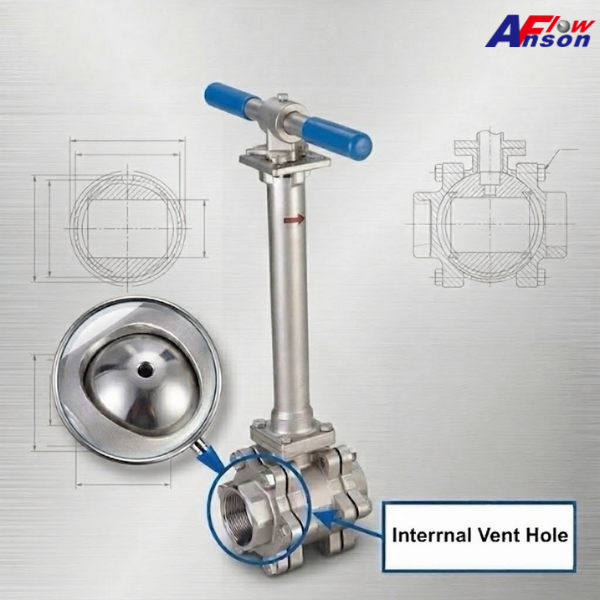
LNG (Liquefied Natural Gas) is a key driver of the global energy transition.Across every stage of an LNG system—from cryogenic liquid storage and low-temperature transferto vapor return and high-pressure natural gas distribution—valves must deliver exceptional reliability, sealing performance, and safety. In the LNG industry, every material selection and design choice is a safety decision. LNG facilities continuously face: ·         Cryogenic temperatures (liquid LNG at approx. –162°C) ·         Two-phase flow transitions between liquid and vapor ·         High-pressure natural gas distribution after vaporization ·         Rapid temperature and pressure cycling ·         Potential ignition risks ·         Corrosive, vibrating, and harsh marine/terminal environments Valves are not just flow-control components—they are the core of system safety and operational stability.   🔥 Three Major LNG System Challenges — Solved by Anson Flow   Pain Point 1: Material Stability & Sealing Reliability in Cryogenic Service (Liquid LNG Section) Liquid LNG operates between –162°C and –196°C.At these temperatures, standard industrial valves may experience material shrinkage, seal hardening, stem leakage, or packing failure. Anson Flow Cryogenic Valves — Engineered for Liquid LNG & Liquefied Gases 🔵 Cryogenic Floating Ball Valves ·         AF-36C (3-Piece Floating Ball Valve, Direct Mount) ·         AF-51C (ANSI/JIS Flanged Floating Ball Valve) ·         AF-53C (DIN PN10/16/25/40 Floating Ball Valve) ·         BS 6364 cryogenic certification ·         PCTFE seat rated to –196°C ·         Extended bonnet to minimize cold-bridge effect and packing freeze ·         Suitable for LNG, LPG, liquid natural gas, LOX, and other cryogenic media 👉 All Anson Flow cryogenic ball valves are Floating Type. No trunnion cryogenic models. 🟠 Cryogenic Globe / Gate Valves Also available for cryogenic isolation requirements in auxiliary low-temperature sections.(Not BS 6364 certified and without PCTFE seats)   Pain Point 2: Pressure Fluctuations & Liquid–Vapor Two-Phase Flow During tank loading/unloading, LNG bunkering, or vapor return,rapid transitions between liquid → flashing → vapor can result in: ·         Seat wear ·         Unstable operating torque ·         Reduced shut-off performance Anson Flow’s Solution ·         Floating ball valves naturally compensate for pressure variation and maintain sealing ·         Optimized ball-seat geometry reduces two-phase flow impact ·         Ideal for: o    LNG tank piping o    Bunkering loading arms o    Truck / ISO tank operations o    Vapor return & regasification pipelines   Pain Point 3: LNG Facilities Require Long Continuous Operation with Limited Maintenance Windows Terminals, bunkering stations, and industrial gas facilities demand long-term reliability under both cryogenic and high-pressure conditions. Anson Flow’s Advantages ·         Cryogenic Floating Ball Valves + PCTFE seat + Repair Kit → longer service life & shorter maintenance downtime ·         ISO direct-mount design for easy automation integration ·         Taiwan manufacturing → stable production & delivery ·         OEM and private-label assemblies available ·         Compliant with common specifications in gas plants, energy facilities, and EPC projects   🚀 Not Just Cryogenic — Anson Flow is a Valve Supplier for the Entire LNG System Many believe “LNG = cryogenic valves only.”In reality, a large portion of LNG infrastructure involves ambient-temperature and high-pressure natural gas,which requires different types of industrial valves. That’s why Anson Flow provides a complete valve portfolio for the entire LNG supply chain:   🔵 Cryogenic Section (Liquid LNG) — Use Cryogenic Series Suitable for: liquid lines, cryogenic loading/unloading, early vapor-return stages ·         Cryogenic Floating Ball Valves (BS6364 + PCTFE) ·         Cryogenic Globe / Gate Valves   🟢 Ambient / High-Pressure Gas Section (After LNG Vaporization) — Use Industrial Valves Suitable for: natural gas distribution and downstream industrial applications ·         Fire-Safe API 607 Ball Valves ·         High-Pressure Ball Valves (up to 6000 PSI) ·         Metal-Seated Valves (abrasion-resistant for gas with particulates) ·         Gate / Globe / Check Valves (isolation / regulation / backflow prevention) ·         OEM Custom Components ·         PFA-Lined Valves (for downstream chemical processing if applicable)   🌍 Where Anson Flow Valves Are Used in LNG Infrastructure Cryogenic / Liquid LNG Applications ·         LNG storage tank liquid & vapor lines ·         LNG loading/unloading & bunkering ·         Cryogenic vapor-return lines ·         LNG / LPG / LOX storage systems Ambient / High-Pressure Gas Applications ·         Natural gas pipelines after vaporization ·         Gas-fired boilers & industrial burners ·         Natural gas for industrial processes ·         Bypass & blowdown systems ·         Ambient vapor lines inside terminals ·         Natural gas recovery systems Anson Flow supports the entire LNG infrastructure — not just the liquid section.   📩 Contact Us — Let’s Select the Right Valve Package for Your LNG System Tell us your media, temperature, pressure, end connection, and operating requirements,and we will recommend the ideal combination of cryogenic and industrial valves for your LNG application. 📧 sales@ansonflow.com🌐 https://www.ansonflow.com